
The Illiberal World Order
Trump's national security strategy proposes to save the West by first destroying it

There are passages in the Trump Administration’s new national security strategy where you might find yourself thinking, “That’s pretty normal.” For example: “The days of the United States propping up the entire world order like Atlas are over.” The apostles of restraint at the Quincy Institute, for example, would say no less. Or: “the purpose of foreign policy is the protection of core national interests.” That’s Realism 101. In one of their debates in 2000, George W. Bush and Al Gore were asked whether American foreign policy should focus most on “values” or “interests.” “Values,” said Gore. “Interests,” said Bush. If 9/11 had never happened, Bush would have produced a kind of America First-lite national security strategy very much like portions of Trump’s, right down to the braying patriotism, the scorn for “transnational” institutions and the willingness to tolerate egregious behavior from our friends. Tough-minded realism, you could say.
But in other respects Trumpian realism doesn’t sound at all like that of Republicans like Bush père or fils or Richard Nixon. First, while conservatives have been protective of American sovereignty since Henry Cabot Lodge torpedoed Woodrow Wilson’s League of Nations, Trump actually seeks to promote what you might call “sovereigntism” as a foundational doctrine for world order. The national security document harshly criticizes–maybe “mocks” is a more accurate word–European nations for surrendering their sovereignty to the EU. The strategy document is silent or openly contemptuous about global problems like climate change or communicable disease that require a global rather than sovereign response.
Bullying As Principle
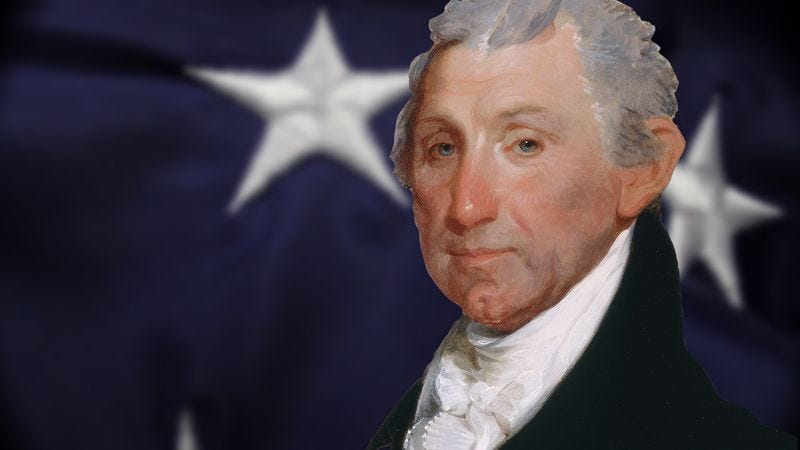
Equally archaic is Trump’s proposal to revive the Monroe Doctrine, a relic of the era when great powers considered themselves entitled to dominate their weaker neighbors. Or maybe we should think of it as a wish to join Russia and China in reaping the old-fashioned benefits of great-power status. (So, too, with sovereigntism, a preoccupation of modern autocrats.) The document proposes a “Trump Corollary” to the Monroe Doctrine, stating that “non-Hemispheric competitors” not only must not threaten the sovereignty of Latin American states–that’s Monroe–but also must not “own or control strategic vital assets.” So, no Chinese-owned ports or infrastructure. (Will we honor a reciprocal demand from China about its sphere of influence?) What’s more, Washington will “discourage” Latin states from economic “collaboration with others.” When big deals are to be made, the United States will expect to be “their partner of first choice.” Those who seek to defy this diktat will encounter “serious pushback.”
What if, say Brazil, finds a strategic partnership with a non-Hemisphere competitor to be in its interest? Tough luck. The document asserts, or rather assumes, that the United States has the right to tell less powers what to do. This is bullying, not realism. Realists have always sought to understand the interests of other nations rather than supposing, as liberal idealists tend to do, that they think just like us. In its 1991 strategy document, the administration of Bush-the-Elder carefully analyzed the capacities and aspirations of post-Soviet Russia, the hopes of “the new Europe,” the growing clout of Germany and Japan. The Trump document has virtually nothing to say about the interests of other nations and offers little explanation of how the United States will gain their acquiescence. The compliance of lesser states is almost taken for granted.
The proper word for the new strategy is not realism, but solipsism. Just as a solipsist–like Trump–sees only himself as a subject and other selves as objects, so the document sees the United States as supreme sovereign and other states in its region as targets, whether accommodating or intransigent. That is a strategy suited to dominance, in life and in foreign policy. Insofar as you are not dominant–as the U.S., increasingly, is not–you will live to regret treating others with such disregard.
A Pass For The Autocrats; Disruption For The Liberals
In fact, the Trump team aren’t realists at all. While the Administration promises to stop “hectoring” Middle Eastern autocracies into “abandoning their traditions and historic forms of government”--i.e., chopping critics into pieces–it does plan to promote something called “European greatness.” That does not, of course, mean helping Europe achieve its own ambitions. The values Trump wishes to propagate are directly hostile to those of Europe. The strategy document insists that the continent is facing “civilizational erasure” through openness to migration, loss of sovereignty, “regulatory suffocation” and the “subversion of democratic processes” in the name of countering “patriotic European parties”--the illiberal and nativist factions that threaten to take power across the continent.
We must pause here to recognize how genuinely bizarre this is. The document says openly what until now we have only inferred: the United States has no wish to challenge, or even influence, the authoritarian rule of Gulf monarchies, Vladimir Putin or Xi Jinping, but it will actively seek to change the nature of Europe’s liberal democratic regimes. Realist restraint for autocrats but active meddling for Western democracies. American policy toward Europe will include “cultivating resistance to Europe’s current trajectory.” That’s the kind of language JFK used about the Soviet Union.
So Donald Trump would say, as Al Gore did, that American foreign policy must promote American values, but the values are those that will rescue Western civilization from the curse of liberalism.What does that mean? The document doesn’t say directly, but it’s littered with hints. Donald Trump’s America believes is chestily patriotic; committed to “strong, traditional families”; repudiates “radical ideologies” that exalt “group status” over the individual; and embraces the cultural traditions of a specific people rather the broad principles of toleration and rule of law that have allowed diverse people to thrive in democratic societies. The United States from the time of Wilson has promoted democracy; henceforward it will promote ethnic and cultural nationalism.
In Donald Trump’s first term I often felt that we were too quick to say that the sky was falling, the brownshirts would soon be filling the streets, etc. Trump’s intentions were the worst, but his capacities were limited. His first-term national security strategy was a conservative status-quo document. We were also too quick to see him as a sui generis figure, forgetting how George W., Newt Gingrich, Jerry Falwell, et. al. had prepared the way for illiberal populism. The “guardrails” of liberal democracy had begun to totter well before Trump came along. But I don’t feel that way now. I feel that we are living through history, and must shake ourselves awake to recognize the immensity of the change taking place all around us. Some time in the not-very-distance future historians may look back to the national security document as a signpost on the path to illiberal government, not only here but elsewhere in the West.
Of course nothing is inevitable, neither the persistence of liberalism nor its demise. Here’s a more hopeful thought to end on: if all goes well, the next national security strategy will be very different from this one.
Good description of this "national security strategy" in its aspects of solipsism, bullying, animus against Europe and casual contempt for Latin America. In addition, I'd stress how it reverses our nation's WWII and Cold War legacies by embracing the ideological and geopolitical goals of Hitler and Stalin.
Shared on Meta screens.