
The Liberal Case For Virtue
If there is one, now is the time to make it

On Sunday I published an Op-Ed in the New York Times in which I asked whether, given the depravity of our civic culture, “public schools should continue to regard the moral development of children as a purely private matter.” They need not, I argued, and they should not.
This is a very strange argument for a professed liberal to make. Limitations of space prevented me from describing the thought process that brought me to this conclusion; I’d like to use this column to try to do so.
Can We Change The Culture?
The first question that needs to be posed is: Why should we even think that we can address our collective intolerance, cruelty, vulgarity, etc. through social institutions like schools? Shouldn’t we think of “culture” as the precipitate of political or economic choices? Daniel Patrick Moynihan once famously wrote, “The central conservative truth is that it is culture, not politics, that determines the success of a society. The central liberal truth is that politics can change a culture and save it from itself.”
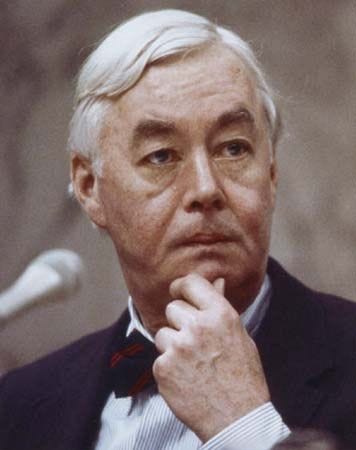
Moynihan was thinking about the great tangle of race and poverty. Conservatives blamed “underclass values” for persistent Black poverty; liberals said that those values had been shaped by bad, and often racist, policies, and could be re-shaped by better policies. Yet the conservative part was also true–values shape behavior, and a healthy society needs to encourage some values and discourage others.
The wreckage that Donald Trump has wrought to our collective being has made liberals much more prepared than they used to be to accept the salience of culture In a recent post in The Bulwark, the estimable Jonathan V. Last wrote that a society as willfully ignorant, as tolerant of open corruption and indifferent to the rule of law as ours could barely maintain even the minimal level of civic virtue upon which any liberal society depends. But, he concluded, there was nothing to be done, because cultural problems, unlike political ones, cannot be “solved.”
Well, no, culture can’t be directly addressed in the way that tax policy can be. But we have institutions that shape both character and knowledge–public schools and colleges. That’s why people like me write about civic education. Current efforts to regulate access to social media among children constitute both an acknowledgement of the shaping power of social media and an attempt to mitigate its harms. And of course, as we’ve learned to our dismay, the way our political leaders speak and act affects, however indirectly, the way we behave. After four years of civil war, Lincoln, with his peerless understanding of the power of rhetoric, used his second inaugural address to urge both sides to practice “malice towards none” and “charity for all.”
Liberty Is Not Everything
The second question I have had to ask myself is: How can liberals talk about mechanisms for shaping individual behavior without violating their bedrock faith in individual liberty? The fourth article of the Declaration of The Rights of Man expresses the liberal objection to prescribed behavior as succinctly as possible: “Liberty consists in the freedom to do everything which injures no one else.” Freedom of choice in personal life is not only a personal right but the means to a profound social good. In his great essay “On Liberty,” John Stuart Mill defended what he called “experiments in living.” The great enemy of liberty, he argued, was the socially enforced moral code of the day, which imposed a fearful penalty on anyone (like himself) who chose to live according to his own lights, and thus inflicted a deadening conformity on society .
This proscription bears very directly on the argument I made about the teaching of virtue in the schools. It has been an article of faith among progressive thinkers from the time of John Dewey that children must be afforded the freedom to develop their full individuality–ergo, no imposition of moral codes. In the 2015 Civics Beyond Critics: Character Education In A Liberal Democracy, the political theorist Ian McMullen concludes that most liberal thinkers would limit schools to “equipping children to engage in public debate and critically examine rival propositions”--critical thinking and nothing more.
This is reductio ad absurdum liberalism (which McMullen himself rejects). First of all, whatever restraints apply to our treatment of adults should not automatically extend to children, the future citizens of a democratic culture. Second, schools already shape children’s behavior by telling them to show up on time, stay in their seats, raise their hands. Should they limit that role to rule-observance? Finally, and most importantly, liberals have values beyond the freedom to speak and behave as you wish. No liberal society can survive long if each individual regards only his or her own autonomy. The Founders believed, to a man, that republics survive only so long as the people remain public-spirited.
The question of whether liberal societies have affirmative values that they must protect and nurture–and, if so, what they are–is too vast to venture into here. But the idea has many advocates. In Liberal Purposes, to take a single example, the political thinker William Galston argued against a value-neutral, process-oriented conception of liberalism, insisting that liberals share at least an implicit view of “the good life.” That understanding includes the avoidance of basic evils like suffering and cruelty as well as the embrace of central goods like “discernment and respect for the rights of others.” Such a consensus does not form on its own. Galston argues for a form of civic education that goes beyond–actually, way beyond–critical inquiry to embrace “a noble, moralizing history” that will help “confer legitimacy on central institutions.”
What Must We Encourage?
So liberals must not leave the sphere of culture to the right, and do accept that certain affirmative goods must be nurtured. But what, exactly, are those goods? By expressly endorsing the teaching of “virtue” in my article in The Times, I suppose that I agreed to play on the conservative side, since that word has become almost a shibboleth among culture warriors. (Remember The Book of Virtues, William Bennett’s hectoring compendium of moral fables for upright young persons?) Was that the wrong place to stand–or at least the wrong way to brand the liberal response to our cultural crisis?
Perhaps the expression we should use is “civic virtue,” which is to say the attributes that enable citizens to live together and to engage together in a democratic society. The Founders, who learned the civic virtues from Cicero, who in turn absorbed them from Aristotle, could have ticked them off: wisdom, justice, courage, temperance. For us, however, this must be a matter of perpetual debate. Galston includes the self-discipline to make sacrifices for the public good as well as the entrepreneurial skills needed to thrive in a free-market society.
I, on the other hand, would say we already have all the getting-ahead aptitudes we need, and then some. We need, rather, to respect the primacy of the civic sphere in a democratic society. We must, that is, use such levers as we have to remind citizens (and future citizens) that we are not only consumers, that human relationships ought not be seen as market transactions, that life does not simply amount to amassing enough human and material capital to emerge the winner in a Darwinian struggle. Market competition reinforces our inequality; citizenship reinforces our inequality.
I am 71 years old. I can say without hesitation that our civic culture is diseased in a way that it never has been before. We are meaner to one another, more willing to tolerate and even commit acts of cruelty, more debased by spectacle and sensation, more cynical about good motives and more suspicions of professions of objectivity or neutrality than we have ever been in my lifetime. I have no illusion about our ability to “solve” our predicament but also cannot accept that we are helpless to act against it–or that we have to wait until a liberal Democrat rides to our rescue with policies that reduce inequality, restore the dignity of labor and so forth.
Our sickness is already exacting a terrible toll. My friend Javier Ergueta recently wrote an anguished post in his newsletter, “More Light Than Heat,” about the “farewell letter” written by Cole Allen, the gunman who had planned to kill senior White House officials. That note, Javier wrote, was the work not of a “whack job,” as Donald Trump put it, but of a morally serious and despairing young man who had reasoned himself into a terrible, tragic corner.
“Milions of Americans,” Javier went on, “are looking at what is happening in their country and asking the questions Cole Allen asked.” Where do they have to go with these questions? “As a society–in our schools, our churches, our civic institutions, our public conversation–”, Javier asked, “what are we actually doing to help people find their way through the moral labyrinth of this moment?”
All of us–liberals and not–must think about the answer to that question.
Thank you for doing much to widen the Overton window on this critical issue for our society. I'm glad and impressed how many commenters you inspired by your NYT Op-Ed, and how many of those expressed positive interest in this long-derided option.